

Clearer Skin, on a Protocol.
Acne, the marks it leaves and the pigmentation that follows are three separate problems, and we treat them in the right order instead of all at once.
Clearer Skin, on a Protocol.
Acne, the marks it leaves and the pigmentation that follows are three separate problems, and we treat them in the right order instead of all at once.
Three Problems, One Sequence
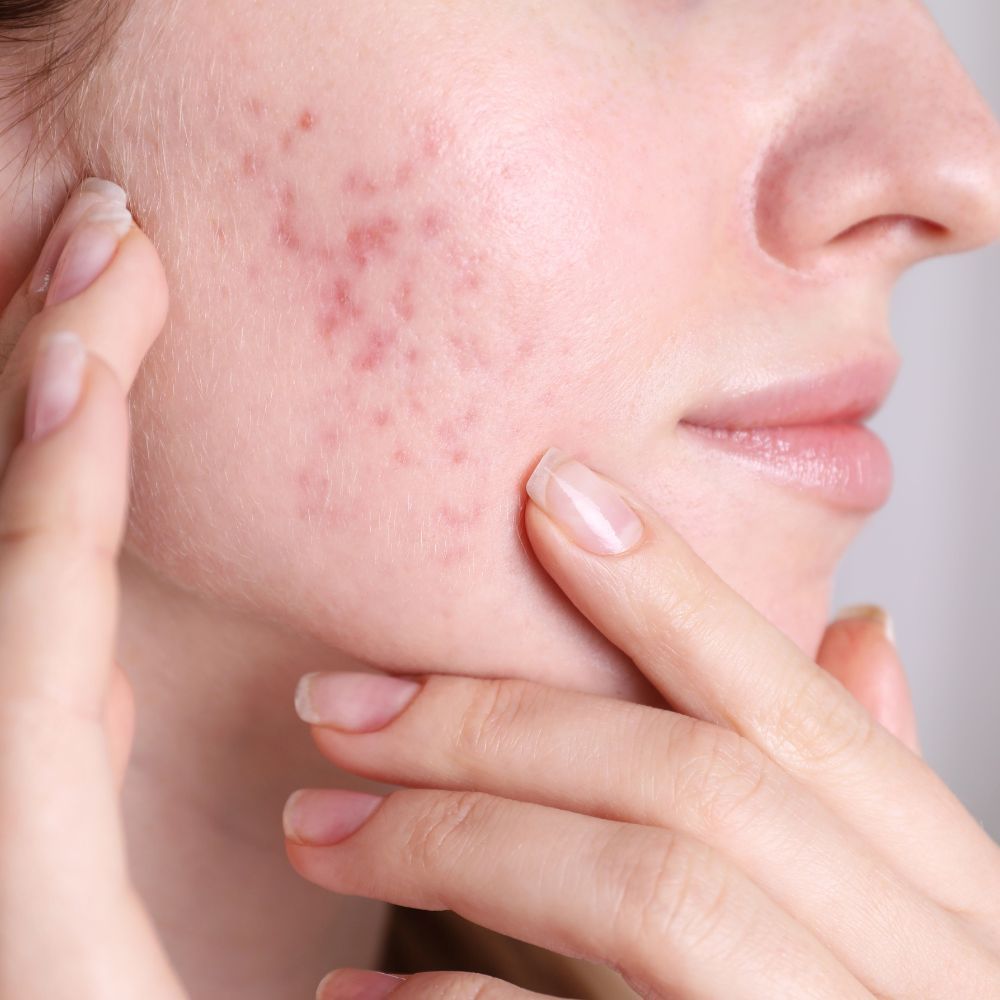
Active acne comes first. Until breakouts are settling, resurfacing and collagen work are the wrong tools, and in reactive skin they can make things visibly worse. Our early work is about calming inflammation, clearing congestion and getting a home routine you will actually keep, which is usually where the real progress hides.
Scarring is a separate job with a separate timeline. Rolling and boxcar scars are structural changes in the dermis, and they respond to collagen stimulation through microneedling, sometimes with PRP or exosomes added to support the healing response. That work is done in a course of sessions spaced weeks apart, and it changes depth gradually rather than immediately.
The marks left behind are often not scars at all. Flat red or brown spots are post inflammatory color change, and they fade with time, pigment focused treatment and disciplined sun protection. Sorting which of the three you have, on which parts of your face, is the entire point of the first appointment.
Four Reasons This Approach Works
The Right Order of Operations
Calm the breakouts, then rebuild texture, then address color. Skipping steps is what stalls most acne plans.
Assessed by a Clinician
A nurse practitioner can consider your medications, hormones and skin conditions, not only what is on the surface.
Written for Teenagers Too
Younger patients get plain instructions and a routine that fits a school morning, and parents get a straight explanation.
Honest About Scar Depth
Some scars soften a lot, some soften a little. We tell you which yours look like before you commit.
What a Skin Health Plan Supports
Breakout control is usually the first change, textural work is judged after three or four sessions, and pigment fades slowly across months with strict sun protection.
Fewer Active Breakouts
Consistent clearing and a workable routine support calmer skin with fewer new inflamed lesions.
Less Congestion
Regular treatment supports clearer pores across the forehead, nose and chin where buildup collects.
Softer Scar Texture
Collagen stimulation supports gradual softening of rolling and boxcar scarring across a course.
More Even Color
Pigment focused care supports the fading of the red and brown marks left after a breakout settles.
A Routine You Can Keep
Three or four products used properly beat a ten step routine abandoned by the second week.
Confidence in Bright Light
Most people describe the real result as not thinking about their skin under office lighting.
Why the Order Matters So Much
Inflamed skin is reactive skin. Aggressive resurfacing over active acne can spread bacteria, trigger more inflammation and leave deeper marks than the breakout would have, particularly in deeper skin tones where pigment responds strongly to injury. So the first phase is deliberately unexciting, and it is the phase that protects the results of everything after it.
Once skin is settled, collagen work becomes safe and useful, because a controlled injury heals cleanly instead of feeding the fire. That is also when adding PRP or exosomes makes sense, since the point is to support the repair response we just triggered. The sequence is not a sales structure, it is what keeps the treatment from backfiring.

Skin Improves in Phases, Not Days.
Calm first, texture second, color third. Each phase makes the next one safer and more effective, and rushing the order is what costs people a year.

The First Appointment, Step by Step
We examine your skin under magnification and map what we find: where the active breakouts are, where texture has changed, and where the discoloration sits. We ask about your history, your cycle if it is relevant, medications, and every product currently in your bathroom, because the routine you already have is frequently part of the problem.
Then we write the sequence. Which phase we start in, what happens at home, how long before we reassess, and what would make us change course. If your acne needs prescription management beyond what we should be handling, we will tell you that at the first visit and point you to the right kind of appointment.
Questions About Acne and Marks
Run a finger across the area and look at it in side lighting. If the surface is dented or raised, it is textural scarring and needs collagen work. If it is flat and only a color change, red or brown, it is post inflammatory pigment and it fades with time and pigment focused care.
Yes, but a specific kind, and not aggressive resurfacing. While breakouts are active we focus on calming inflammation and clearing congestion, and we hold collagen work until your skin has settled. Treating inflamed skin too hard is one of the most common reasons people end up with more marks than they started with.
Most scarring plans run three to six sessions, four to six weeks apart, and improvement is gradual across that course and the months following. Depth, scar type and your age all change the answer. We photograph so that after three sessions you can judge the change yourself.
Usually not, and starting early is often what prevents scarring later. We keep the plan simple, explain it directly to them rather than only to you, and stay conservative with anything that could irritate young skin. If the acne is severe, we will say that it needs prescription management first.
They can, if the acne that caused them keeps recurring or if sun exposure is not managed. Pigment work is only durable when daily sunscreen is part of it, which we will be honest with you about at every visit. Controlling the breakouts is the part that keeps new marks from forming.
Treatments That Pair With This
Acne Treatment
Where we start when breakouts are still active and inflammation needs settling.
Acne Scar Treatment
Collagen focused courses for the textural damage that inflamed breakouts leave behind.
Skin Brightening and Pigmentation
For flat red and brown marks, melasma and uneven tone rather than texture.
Bring Us Your Actual Skin.
Book a consultation in Rockland County and we will tell you which of the three problems you have, in what order we would treat them, and what to expect.
