

Signals, Delivered Directly.
Exosomes are messaging vesicles that tell cells what to do, and we use them when your own platelets need help carrying the instruction.
Signals, Delivered Directly.
Exosomes are messaging vesicles that tell cells what to do, and we use them when your own platelets need help carrying the instruction.
What Exosomes Are, and Are Not
An exosome is a tiny vesicle that cells release to talk to other cells. Inside it sit proteins and genetic messengers carrying instructions: repair here, build collagen there, quiet this inflammation. Exosomes are not cells themselves and they do not replace anything. They are the envelope the message travels in.
The exosome preparations we use are produced in a laboratory under controlled conditions and arrive at our office sealed. That is the fundamental difference from PRP. Plasma comes from your own arm, and its strength depends on your platelet count on the day. An exosome preparation arrives at a consistent concentration every single time.
That consistency matters most when your own biology is not a strong starting point, whether because of age, a medication, or a blood picture that makes plasma less productive. We are not claiming one material is superior to the other. We are saying they answer different questions, and we choose based on yours.
Four Reasons We Reach for Exosomes
Consistency Visit to Visit
The concentration does not change with your sleep, your iron, or how your blood happened to look that morning.
Useful When Plasma Falls Short
Some people simply do not produce a strong platelet yield, and this gives us a second route forward.
No Blood Draw Required
If a needle in the arm is the part you dread, this route removes that step completely.
It Combines With Plasma
The two materials are not rivals, and we frequently run them together across a single plan.
What Exosome Treatment Supports
Signalling treatments work upstream, so what you notice first is usually quality and calm rather than a dramatic before and after.
Calmer Skin
Redness and reactivity often settle as the signalling shifts toward repair instead of irritation.
Collagen Activity
Fibroblasts receive a clearer instruction to build, which shows up as firmness over months.
Faster Recovery
Skin treated with exosomes after microneedling tends to settle down more quickly.
Scalp Environment
The tissue around a struggling follicle can become a friendlier place for it to grow.
Even Tone
Patchy pigment and uneven surface tone tend to read more uniform across a full course.
A Consistent Baseline
Every vial is the same, so we can judge your response instead of the material.
Where the Evidence Actually Stands
Exosome science is younger than platelet science, and we will not pretend otherwise. The mechanism is well described and the early clinical picture is encouraging, but the long term data set is smaller than what exists for plasma. We tell patients that before they book, not afterward.
What we can control is sourcing and handling. We use preparations from established laboratories with documented processing, we store them exactly as specified, and we open them in front of you. Ansa is a board certified family nurse practitioner, and she assesses whether this treatment belongs in your plan before it is ever offered.

Different Tool, Different Question.
We do not run one protocol for everyone. We look at your goals, your history, and your timeline, then we choose the material that fits.

How an Exosome Session Runs
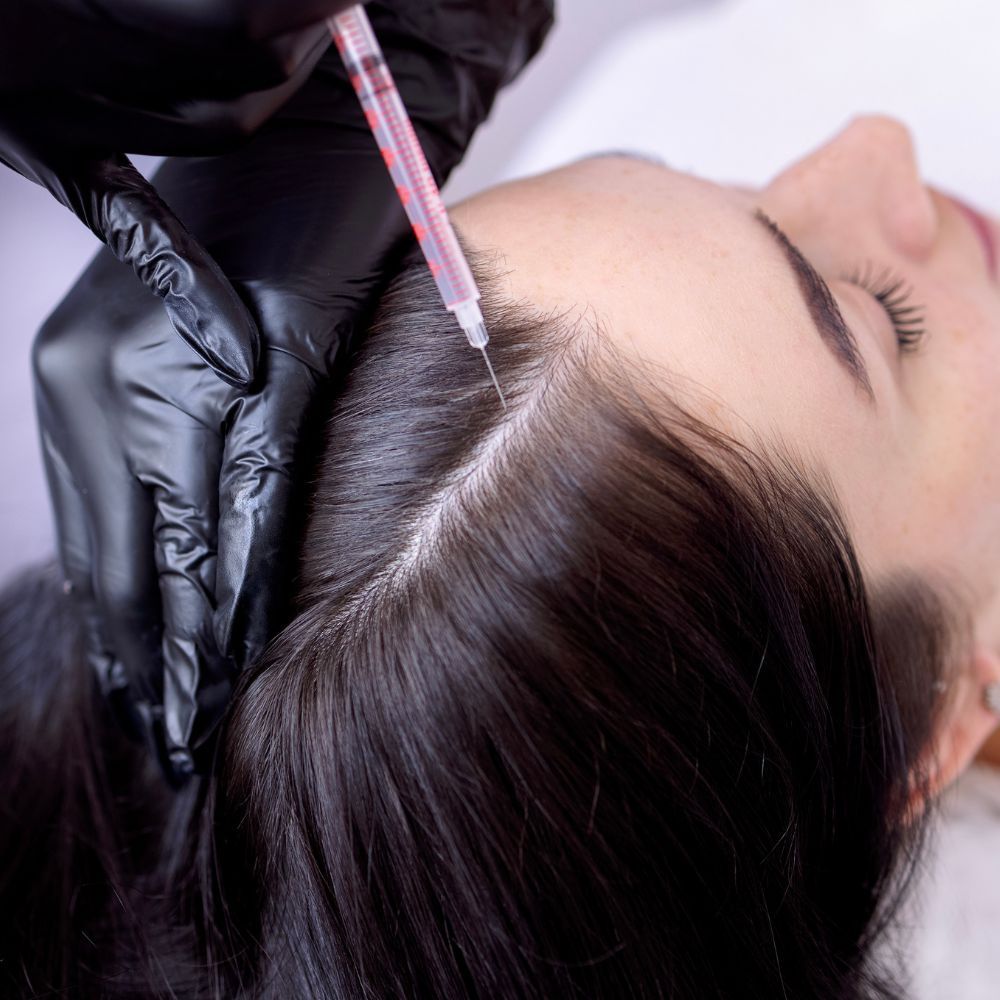
There is no blood draw, so the visit begins with cleansing, photographs, and numbing where the plan calls for it. We create controlled channels in the skin with microneedling, or we deliver into the scalp directly, then the exosome preparation goes on or in while those channels are open and receptive.
You will leave a little pink and slightly warm, similar to a mild sunburn that fades over a day or so. We ask you to leave the skin alone that evening, skip active ingredients for a few days, and keep sun off the area. Patients come to us from across Rockland County for this kind of planning.
Common Questions About Exosomes
PRP is made from your own blood on the day of treatment. Exosomes are produced in a laboratory and arrive at a fixed concentration. Plasma brings your own growth factors, exosomes bring a consistent signalling package, and we choose between them based on your history and your goals.
No. Exosomes are vesicles that cells release to send messages to other cells. There are no living cells in what we use, and we would not describe this as stem cell therapy. Anyone marketing it that way is being loose with the language.
Most people notice skin comfort and tone within a few weeks. Structural change, meaning firmness and texture, builds over two to three months as collagen turns over. We photograph at every visit so the comparison stays honest rather than a matter of memory.
It is well tolerated in our experience, with mild redness and swelling being the usual outcome. The longer term data set is smaller than it is for plasma, because the treatment is newer, and we say so at consultation. We review your medical history before recommending it.
Often, yes. We sometimes use plasma for volume and your own growth factors, then finish with exosomes for the signalling layer. Whether that combination makes sense for you is a consultation conversation, not a package we sell by default.
Ask Which One Suits You.
Bring your questions and your history. We will explain the difference in plain language and recommend the option that actually fits.
