
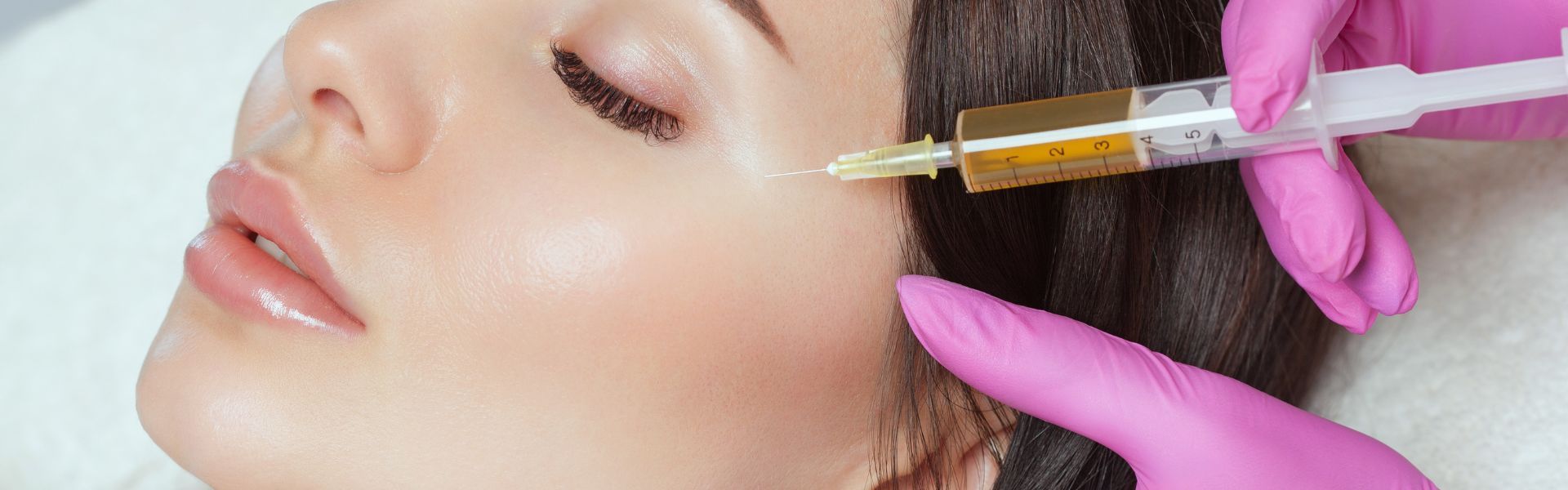
Regenerative Work, Properly Done.
We use your own platelets, and signaling molecules from lab grown cells, to support repair in skin and scalp across a planned course rather than one dramatic session.
Regenerative Work, Properly Done.
We use your own platelets, and signaling molecules from lab grown cells, to support repair in skin and scalp across a planned course rather than one dramatic session.
Two Tools, Two Different Jobs
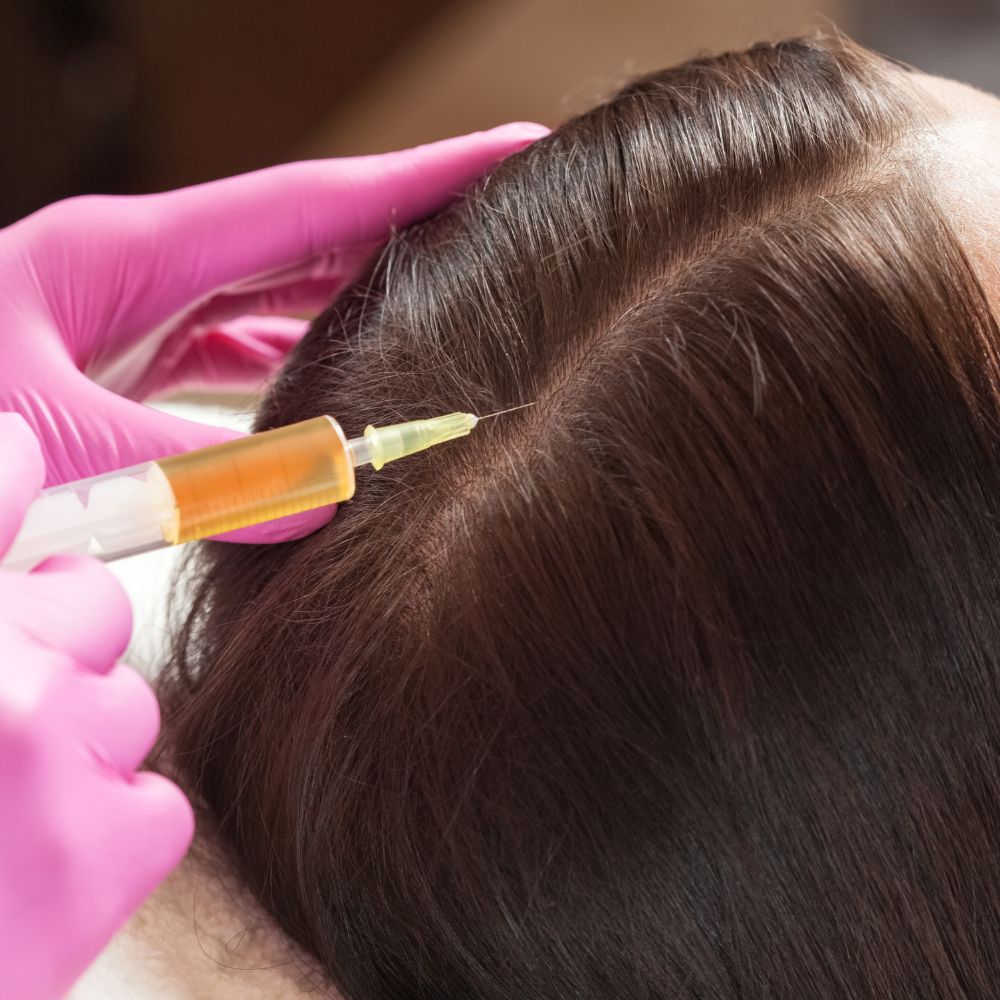
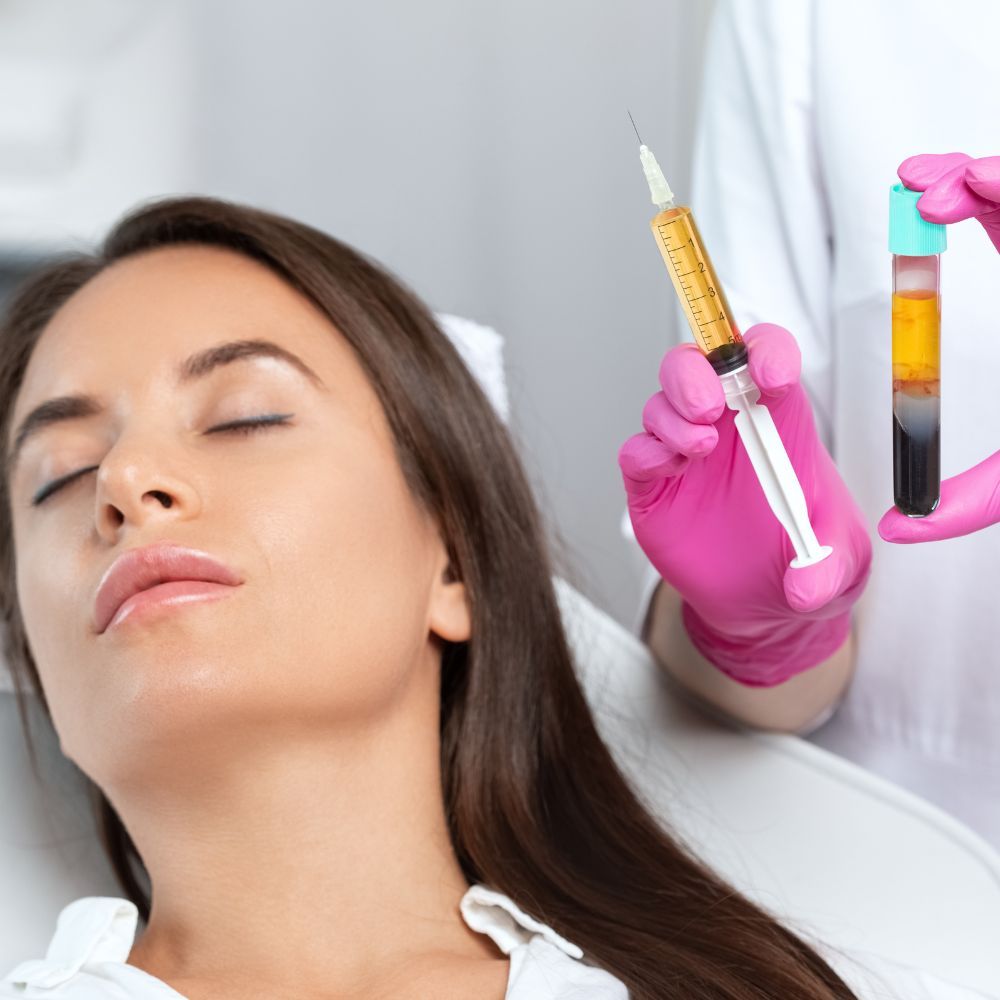
PRP starts with a small blood draw. We spin that sample in a centrifuge to separate and concentrate the platelet layer, then place it back into your skin or scalp, either with microneedling or with fine injections. The growth factors in that concentrate are the reason it is used to support healing and tissue repair.
Exosome therapy works on the same idea from a different direction. Exosomes are tiny vesicles that carry signaling material between cells, and the preparations we use are applied to skin immediately after microneedling, while the channels we made are still open. They are used to support the same repair response without depending on your own blood.
Neither one is a single dramatic appointment, and we do not present them that way. Both are delivered as a course, usually three or four sessions spaced roughly a month apart, with a maintenance interval afterwards. What they support is a gradual change in skin quality, scalp health and density, measured against photographs rather than memory.
Four Reasons People Choose Regenerative Treatment
It Uses Your Own Biology
PRP is drawn from you, concentrated, and returned the same visit, which is why allergic reaction is not a concern.
It Layers Onto What Works
Both add a repair signal to microneedling, so one appointment does surface work and regenerative work together.
It Is Handled by a Clinician
A blood draw, a centrifuge and an injection are clinical tasks, and a nurse practitioner performs all of them.
It Is Measured, Not Assumed
We photograph at every visit, so continuing to session three is a decision based on evidence.
What a Regenerative Course Supports
Repair is gradual by nature, so most people notice skin quality first at around six weeks and see the fuller effect of a course near the three month mark.
Better Skin Quality
Repeated sessions support firmer, more resilient skin quality rather than a temporary surface glow.
Support for Scarring
Combined with microneedling, both are used to support gradual softening of acne scarring and uneven texture.
Scalp and Follicle Health
On the scalp, both are used to support follicle health and the density of hair you still have.
Thin, Crepey Areas
Under eyes, neck and the backs of the hands respond to repair signals where resurfacing alone is too harsh.
Faster Settling
Adding a repair signal after microneedling supports a calmer, shorter recovery for most people.
A Compounding Result
Each session builds on the last, which is why a finished course outperforms three scattered appointments.
Why We Photograph Everything
Regenerative results are gradual, and gradual change is exactly the kind your eye stops noticing when you see it daily in the mirror. Standard photographs at the same angle and lighting solve that. They also protect you, because they make it obvious when a course is not delivering and should be changed instead of repeated.
The other reason is honesty about limits. PRP and exosomes support tissue that is still viable. They do not create new follicles where the follicle is gone, and they will not substitute for surgery or for medical management of a condition driving the problem. When that is the situation, we say so and refer rather than sell you another course.
Repair Happens on Its Own Schedule.
The visible part follows the biological part by several weeks. We plan the whole course up front so you know what you are waiting for.
How a Session Actually Runs
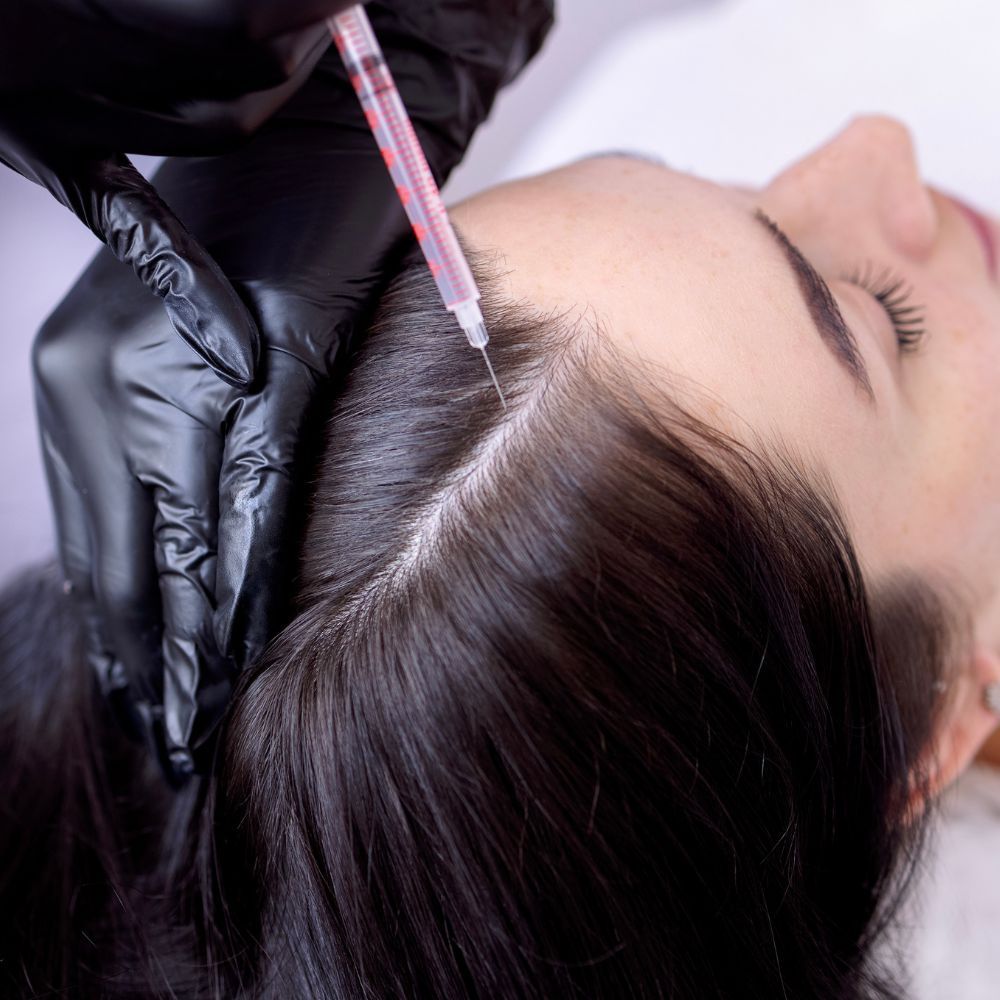
For PRP, we draw a small amount of blood, spin it while you are numbing, and treat once the concentrate is ready. Most appointments run about an hour. You leave pink, sometimes a little swollen, and most people are presentable the next day and back to normal by day three.
For exosomes, there is no draw, so the visit is shorter. We microneedle first, then apply the preparation into the open channels and leave it on the skin. Aftercare is deliberately plain for both: no makeup for a day, no heat or heavy sweating, gentle cleanser and sunscreen while your skin settles.
Questions Patients Ask Before Booking
Neither is universally better, they suit different situations. PRP uses your own biology and is our usual starting point, while exosomes avoid the blood draw and are often chosen when we want a stronger signal or when platelet quality is a concern. Some plans use both across a course, and we decide that at the assessment.
Most courses are three or four sessions about four weeks apart. Skin quality changes are usually the first thing people notice, often around the six week mark, with the fuller effect visible near three months. We compare photographs at each visit rather than relying on how you feel that day.
It is a standard draw, the same as any routine blood test, and it takes a couple of minutes. The treatment itself is done after topical numbing, so most people find it very manageable. If needles are difficult for you, tell us and we will slow the visit down.
We apply them topically, immediately after microneedling, so they reach the skin through the microchannels we just created. That is the appropriate way to use the preparations we work with. Anyone offering something different should be able to explain exactly what they are using and why.
It supports skin quality and gradual firmness, and it works best as part of a plan rather than alone. Deep static lines and significant laxity have a structural component that regenerative treatment alone will not resolve. We will tell you plainly where the limit sits for your face instead of selling a course that cannot reach it.
Treatments That Pair With This
PRP Therapy
How we draw, concentrate and use your own platelets, and what a full course involves.
Exosome Therapy
The newer option on our menu, and when we choose it over your own platelets.
Hair Restoration
Where regenerative treatment does its most measurable work, on scalps that are thinning early.
Ask Whether This Suits You.
Book a consultation at our New City office and we will look at your skin or scalp, explain which of the two makes sense, and tell you if neither does.
