

Your Own Blood, Concentrated.
Platelet rich plasma is drawn from you, spun down in our office, and placed back where your skin or scalp needs a stronger repair signal.
Your Own Blood, Concentrated.
Platelet rich plasma is drawn from you, spun down in our office, and placed back where your skin or scalp needs a stronger repair signal.
What Platelet Rich Plasma Is
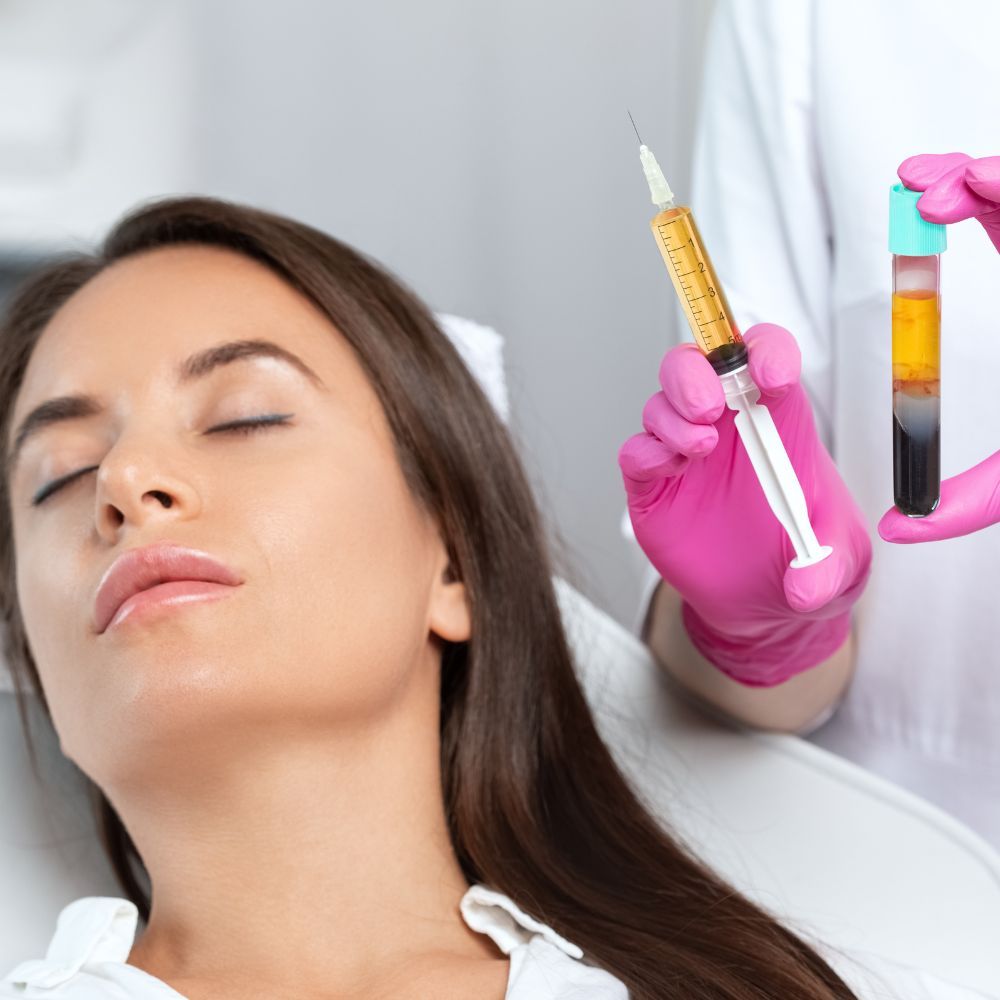
PRP starts with a small blood draw, the same kind you have had at any lab. We spin that sample in a centrifuge until it separates into layers, then we take only the plasma layer carrying the highest concentration of platelets. Nothing synthetic is added. What goes back into you came out of you minutes earlier.
Platelets are best known for clotting, but they also carry growth factors, the proteins your body releases at a site of injury to call in repair. Concentrating those platelets and delivering them into tissue that is aging or thinning is a way of asking that tissue to behave the way healing tissue behaves.
We use PRP in two broad places. Into the scalp, where it supports follicles that are still producing hair, and into the skin, where it supports collagen, texture, and the quality of the surface over a series of visits. The preparation is identical. The depth, the volume, and the spacing of visits are not.
Four Reasons People Choose PRP
It Comes From You
Nothing foreign is introduced, which takes the question of allergy or rejection out of the conversation entirely.
It Works With Biology
Growth factors ask your own tissue to repair itself, so change arrives gradually rather than all at once.
It Layers Well
PRP pairs with microneedling and with other treatments, which lets us build a plan instead of stacking single sessions.
A Clinician Handles It
Ansa draws, prepares, and places every sample herself, under a nursing license rather than a cosmetology one.
What a Course of PRP Supports
Most of what PRP does is slow and structural, so we measure progress at three months and again at six rather than the week after your first visit.
Follicle Support
Thinning hair that is still growing can hold on better and shed less when the scalp is treated in a course.
Skin Texture
Fine surface roughness and dullness soften as collagen turnover picks up across several treatments.
Under Eye Quality
The thin skin below the eye can look less crepey and better supported over time.
Scar and Pore Refinement
Shallow acne scarring and enlarged pores refine gradually when PRP is delivered with microneedling.
A Low Downtime Path
Most people return to normal activity the same day, with redness that settles quickly.
Compounding Results
Each session builds on the one before it, so the fourth visit tends to show more than the first.
Sterility, Handling, and Who Does It
Because PRP is a blood product, handling matters more than marketing. Your sample never leaves the room. We draw it, spin it, and draw it up in a closed process, and we document every disposable we open. That is standard practice in a clinical setting and it is not negotiable here.
Ansa is a board certified family nurse practitioner, which means the person assessing whether PRP is appropriate for you is the same person holding the syringe. If your bloodwork, your medication list, or your medical history makes PRP a poor fit, we will tell you at consultation rather than after you have paid for a course.

A Modality, Not a Menu Item.
PRP is a tool we reach for when your own biology can do the work with a push. When it cannot, we say so.

What a PRP Visit Involves
You arrive, we take photographs, and we draw a small amount of blood from your arm. The sample spins for several minutes while we prepare the treatment area and apply numbing where it is needed. The injections themselves are quick. Most visits run under an hour from the door back to the door.
Afterward you can expect some tenderness, occasional small bruising at injection points, and redness that fades within a day or two. We ask you to skip heavy exercise and alcohol that evening. Everything else, including work, carries on as normal. Our office in New City is open Monday through Friday.
Questions We Are Asked Most
That name gets used loosely online. What we do is draw your blood, concentrate the platelets, and deliver that plasma where it is needed, either by injection or through microneedling. We avoid the marketing name because it tells you nothing about the protocol.
Most plans run three to four sessions spaced about four weeks apart, followed by a maintenance visit later in the year. The exact number depends on what we are treating and on what your photographs show. We build the plan at consultation and adjust it as we go.
The blood draw feels like any lab draw. The injections sting briefly, and we numb the area first when that makes sense. Most people describe it as very manageable rather than painful, and it is over quickly.
Yes, and often that is the better plan. PRP layers well with microneedling and with several other treatments we offer. We sequence them so the skin or scalp has time to respond before we add the next step.
Certain blood disorders, active infections, some medications, and a handful of medical conditions make PRP inappropriate. We review your history at consultation and we will say plainly if you are not a candidate. We would rather turn a treatment down than sell you one that cannot help.
Start With an Honest Assessment.
Come in, let us look at your skin or your scalp, and we will tell you whether PRP is the right tool. No pressure either way.
