
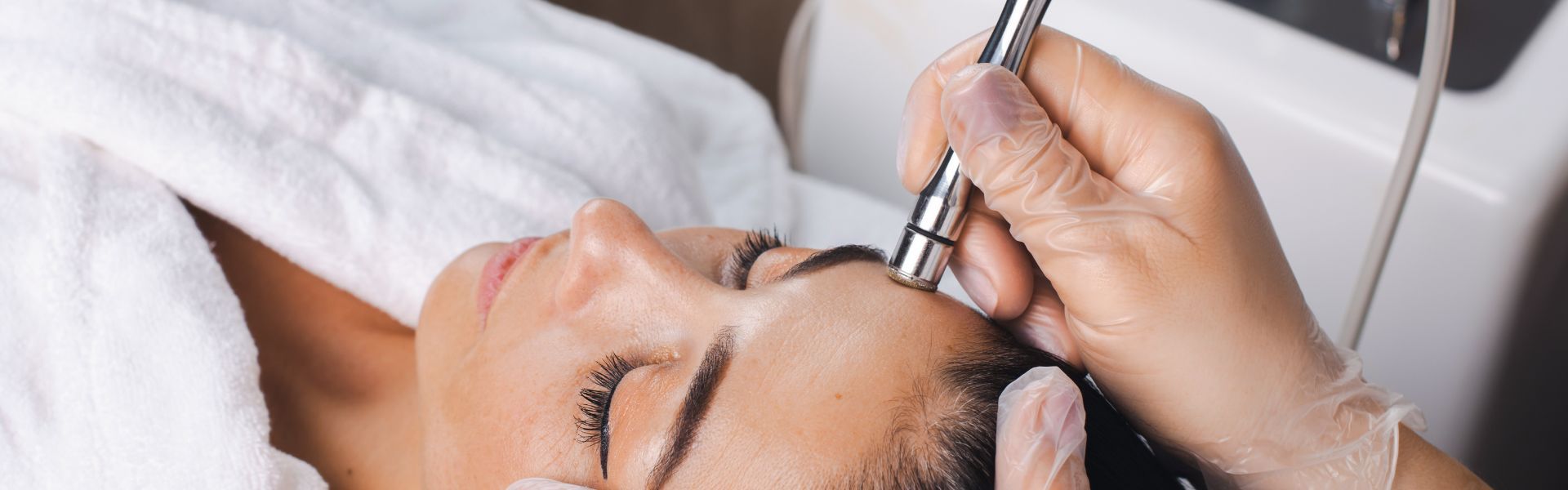
Smoother Skin, Layer by Layer.
DermaFusion microdermabrasion resurfaces the outer layer and infuses treatment serum in the same pass, refining texture and dullness with no peeling and no time away.
Smoother Skin, Layer by Layer.
DermaFusion microdermabrasion resurfaces the outer layer and infuses treatment serum in the same pass, refining texture and dullness with no peeling and no time away.
What Fusion Adds to Microdermabrasion
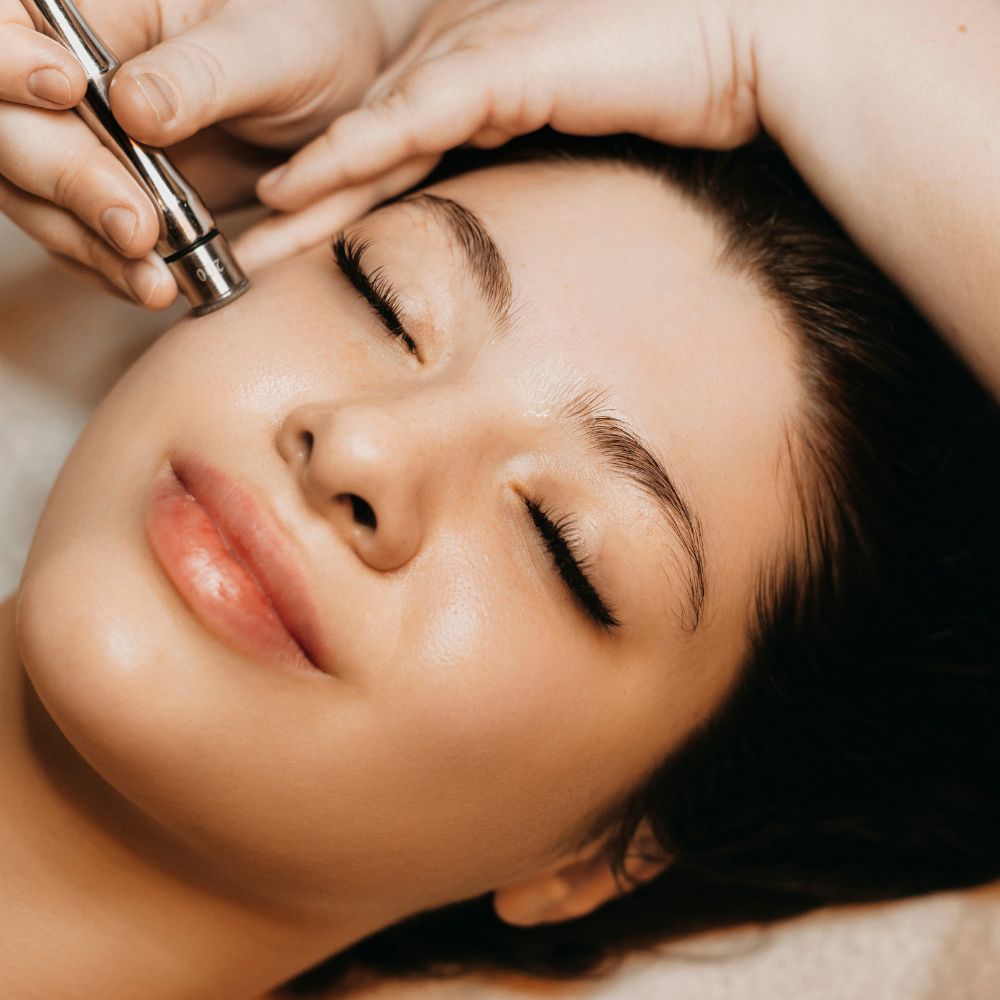
Traditional microdermabrasion sands away the outermost layer of dead skin using an abrasive tip and vacuum. It works, and it has done for decades. What it never did was put anything back, which is why skin could feel tight and stripped once the session was over.
DermaFusion pairs that same controlled abrasion with simultaneous serum delivery. As the tip passes, it exfoliates and feeds treatment solution into the freshly cleared surface in one motion. The result is resurfacing without the dry, sandblasted feeling, and better uptake of whichever active we have chosen for you.
It is a surface treatment, and we are clear about that. It refines rough texture, softens dullness, and helps flatten the look of very superficial marks. It does not reach the depth where boxcar scarring or established lines live, and for those we would recommend microneedling instead.
Four Reasons People Choose DermaFusion
Resurfacing Without Downtime
Skin looks smoother the same day, with no flaking or peeling to plan your week around.
Exfoliation Plus Infusion
The tip removes buildup and delivers active serum in one pass, so nothing is left stripped.
Controlled and Adjustable
We change the abrasion level across the face, easing off around thinner or more reactive areas.
A Better Canvas
Makeup sits smoother and home care absorbs properly once the dead surface layer is gone.
What a Series of Sessions Supports
One session brightens the surface immediately, while rough texture, congestion, and dullness respond best to a course of four to six treatments spaced a few weeks apart.
Refined Texture
Rough, gritty patches soften as the dead surface layer is removed on a regular schedule.
Brighter Surface
Light reflects more evenly off freshly resurfaced skin, which reads as a healthier, less tired tone.
Fewer Clogged Pores
Regular exfoliation clears the buildup that widens pores and traps oil across the nose and chin.
Better Absorption
Serums and prescriptions reach the skin instead of sitting on top of accumulated dead cells.
Softer Fine Lines
Very fine surface lines look less pronounced when the skin above them is smooth and hydrated.
Smoother Makeup
Foundation sits flat rather than catching on dry patches and flaking through the day.
Why Depth and Settings Matter
Exfoliation is only useful up to a point. Push abrasion too hard or too often and the barrier stops protecting you properly, which shows up as redness, sensitivity, and more breakouts rather than fewer. We choose a level that works and stay there instead of chasing an aggressive result in one visit.
Assessment matters as much as technique. Rosacea, active acne, recent isotretinoin use, and certain pigmentation patterns all change whether abrasion is a good idea at all. Because a nurse practitioner is assessing you, we can tell you when another treatment would serve you better, and refer when something needs medical attention.
Steady Progress, Measured Properly.
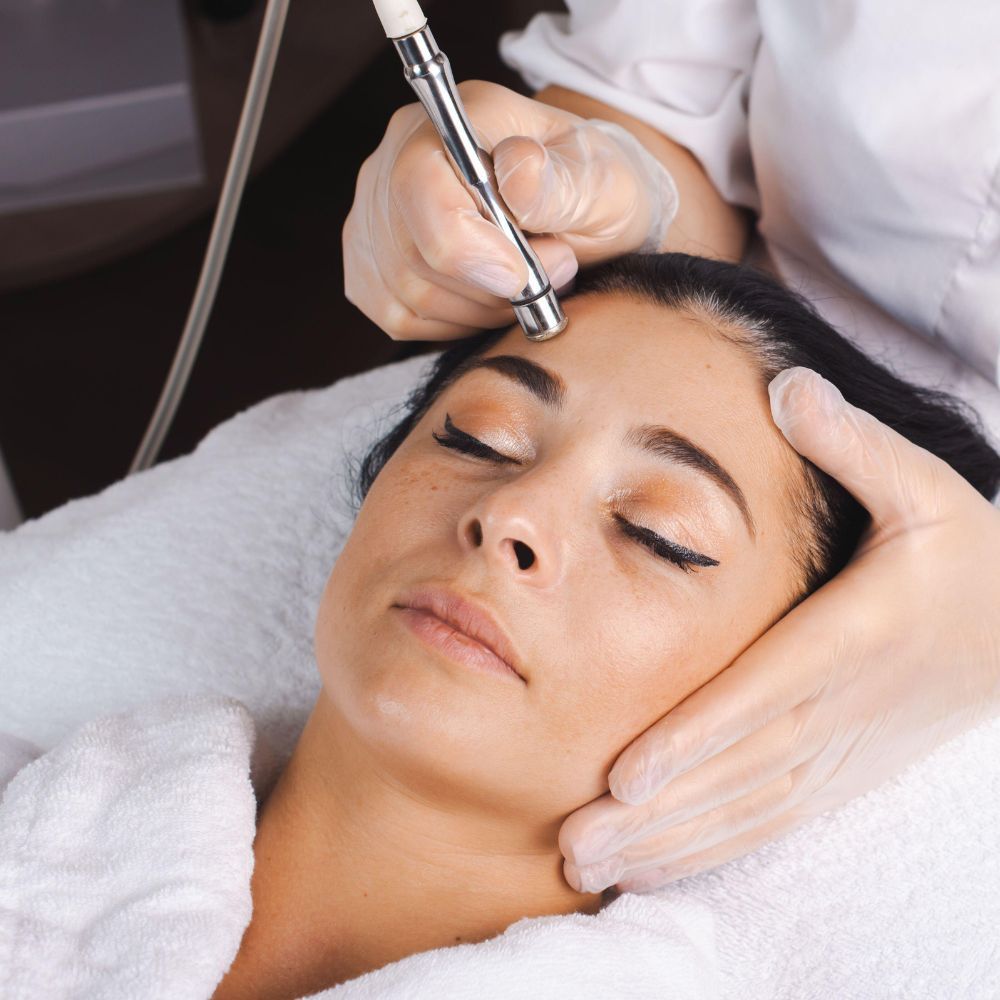
We photograph at the start and again through the course, so the change is something we can look at together rather than something you have to remember.
What the Appointment Involves
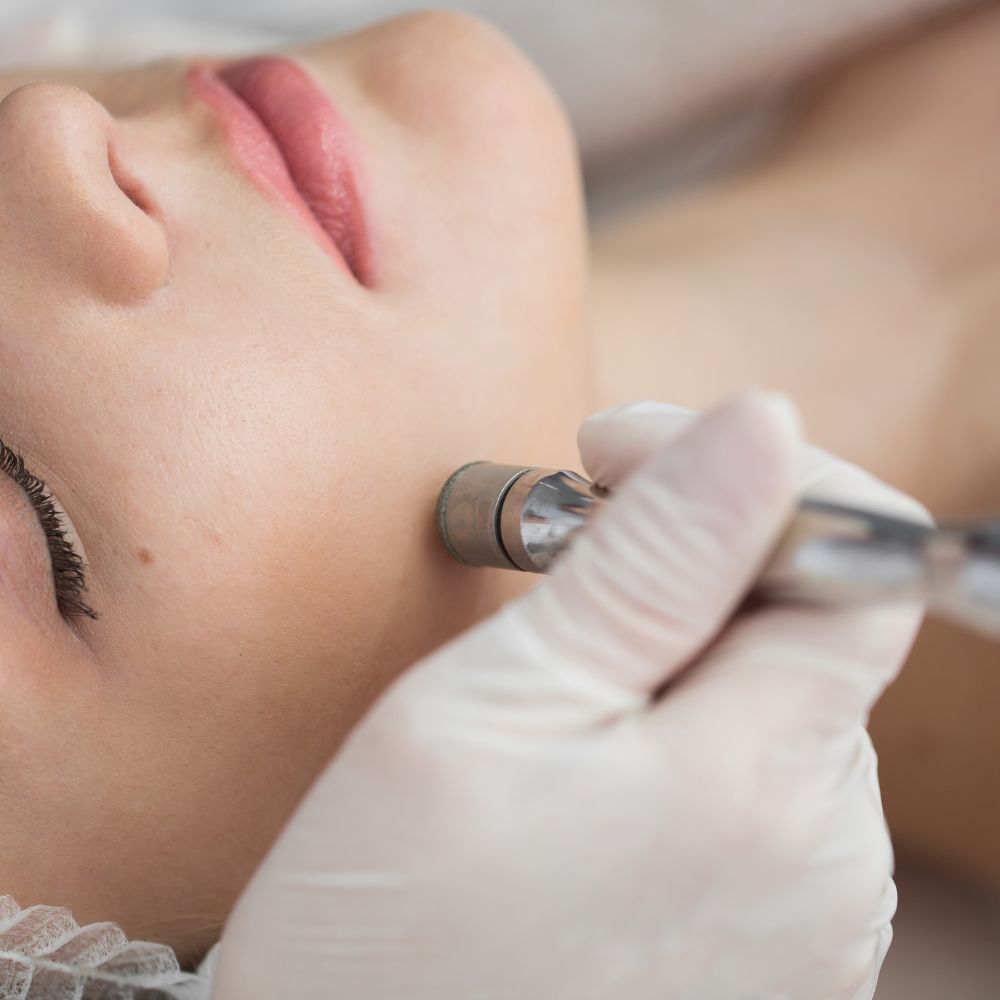
We cleanse, then pass the handpiece across the face in overlapping strokes, section by section. It feels like a firm, textured suction moving over the skin, and most people find it oddly satisfying rather than uncomfortable. Around the nose and along the jaw the sensation is stronger for a moment.
Skin looks slightly pink for an hour or two and then settles into looking brighter. You can apply makeup the same day and go back to work immediately. We finish with sunscreen and give you a short list of what to avoid over the next couple of days.
Questions We Are Asked Most
They do similar work by different means, so the right choice depends on your skin. Abrasion is more predictable on rough texture and buildup, and it carries less risk on skin prone to pigment change. Peels reach further for tone concerns. We often use both across a plan.
Most people see a real difference in texture after four to six sessions spaced two to four weeks apart. A single session brightens the surface but does not hold. After the initial course, many people maintain with a session every couple of months.
It can soften the look of very shallow, discolored marks left behind after breakouts. It does not reach the depth of indented or boxcar scarring, and we will say so plainly if that is what you have. Microneedling is the more appropriate tool for scarring with depth.
Often yes, at a lower abrasion setting and less frequently. Active rosacea, broken capillaries, and inflamed acne are different situations, and we assess those carefully before agreeing to treat. If your barrier is already struggling, we repair it first.
Leave retinoids, acids, and scrubs alone for about two days, and skip saunas, hot yoga, and swimming pools the same day. Sunscreen every morning is not optional in the week afterwards. Everything else, including makeup and normal exercise, is fine.
Treatments That Pair With This
Start With an Assessment.
Let us look at your skin and tell you whether resurfacing is the right first step. There is no pressure to book a full course on the day.
